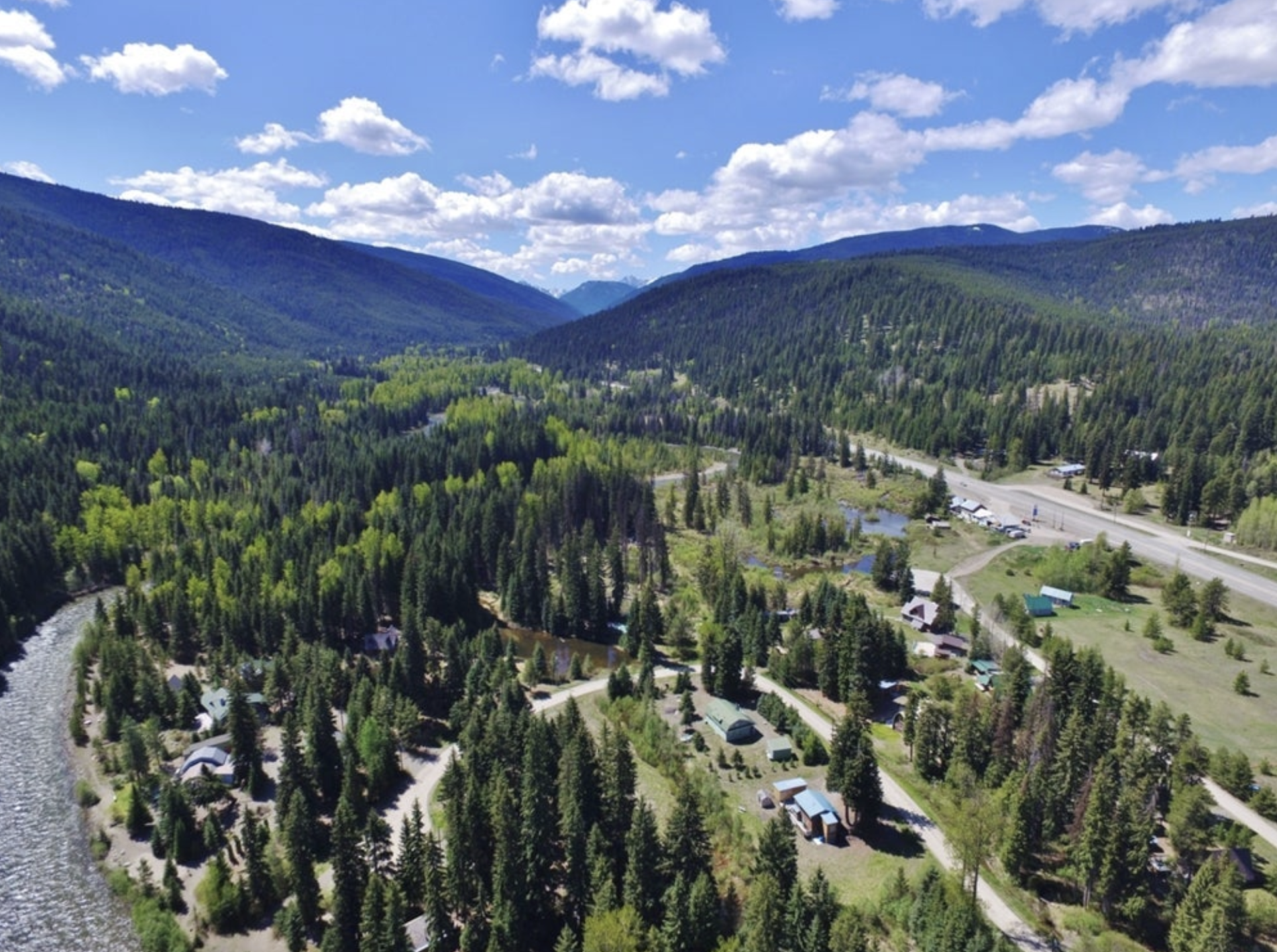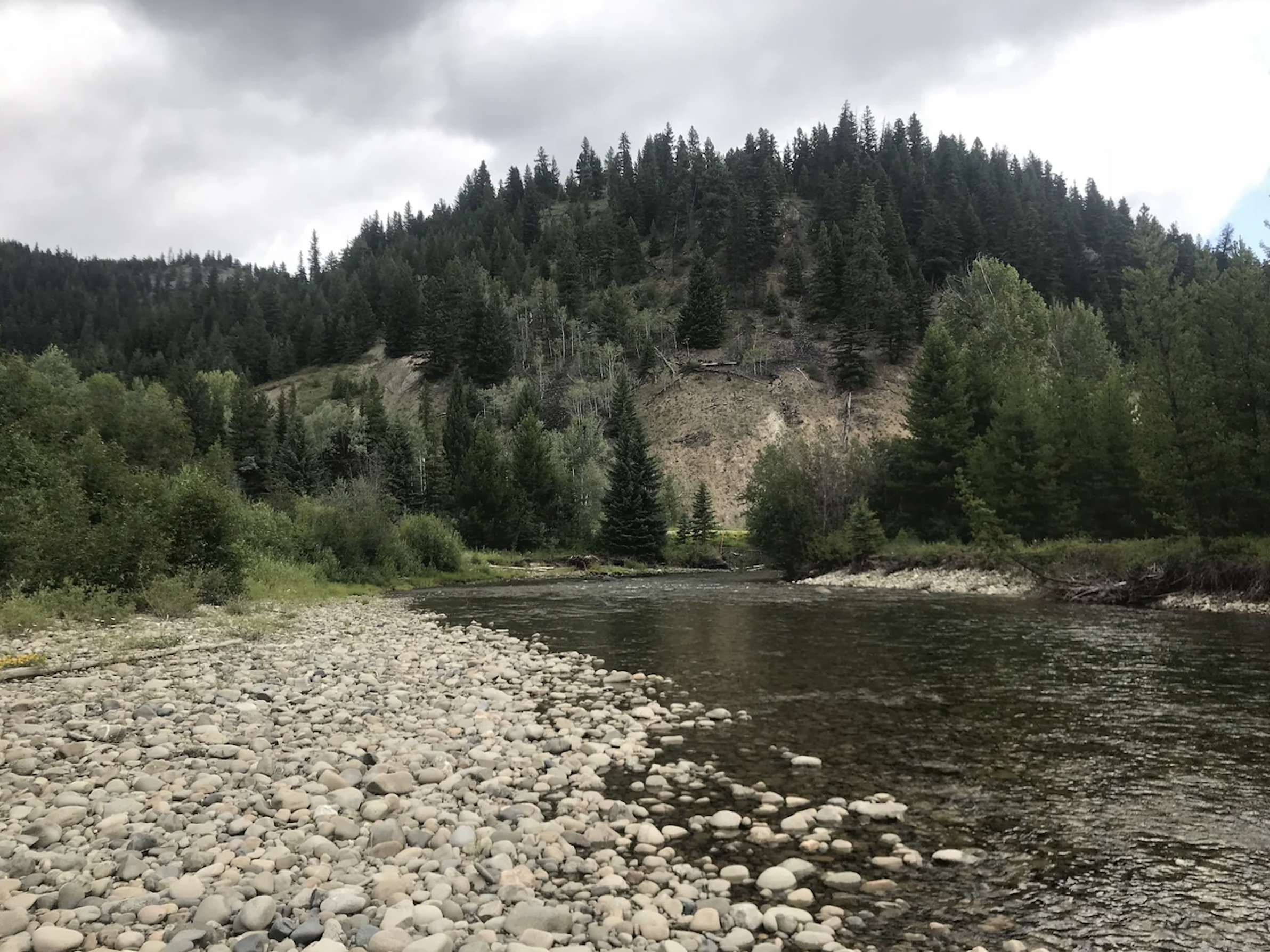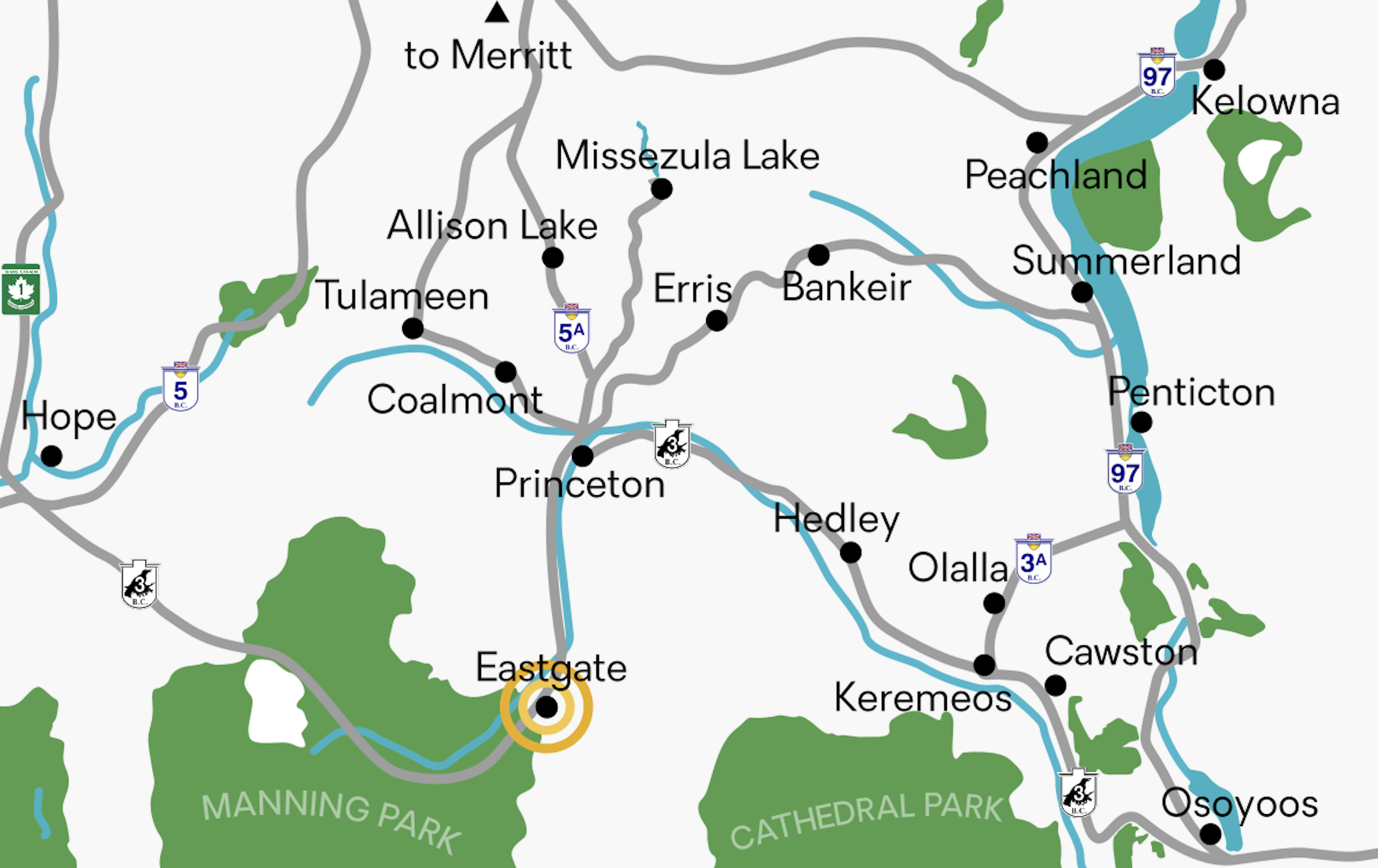
Eastgate BC is a scenic community of cabins, homesteads, retirees, recreation seekers, and seasonal workers, located in the Similkameen River Valley of southern British Columbia, Canada. It’s situated along Highway 3 (Crowsnest Highway), just east of the eastern gates of E.C. Manning Provincial Park. Easily accessed by road, Eastgate is about 45 minutes west of Princeton and roughly an hour east of Hope, making it a quiet yet convenient destination for travellers and outdoor enthusiasts.
Community Site
Welcome to Eastgate BC! This website is a simple, centralized portal for practical information about life in and around the Eastgate area. Whether you’re a full-time resident, seasonal visitor, park worker, or just passing through, the goal of this site is to help you access accurate, useful, and relevant information—quickly and clearly.
The site is designed to be lightweight and app-like, with easy navigation, mobile compatibility, multilingual options, and accessibility features to support all users, including elders and those with disabilities.
It is not a community forum or communication tool. It does not represent or speak for any governing body. It is an independent, volunteer-run information portal.
What the Website Includes
A local business and service directory
Practical FAQs about cabins, utilities, weather, and seasonal living
Trail and recreation info for all skill levels
General guidance on emergency preparedness and safe practices
External links to official resources for road conditions, webcams, weather, and wildfires
Travel tips and expectations for respectful visiting
A growing archive of historical and place-based information
Curated reference links to BC Parks, government services, local maps, and more
Important Note on Wildfires and Emergencies
This website does not provide real-time information about wildfires, forest fires, evacuations, or active alerts. For all fire-related information—including current incidents, fire bans, and evacuation orders—please refer to the following official sources:
We include external links for convenience only. Always check official government sites for the most up-to-date and accurate information.
Ways You Can Contribute
This is a static, non-commercial information site. It grows and improves through community input. If you have clear, factual information that could benefit others, you’re welcome to share it.
You can contribute by providing:
Local Services
Add yourself or someone you trust to the business and service directory (repairs, snow removal, yard care, etc.).
FAQ Updates
Help correct, simplify, or expand the information available in the public FAQ sections.
Recreation & Trail Notes
Submit reports about trail conditions, seasonal access, or closures.
Road and Travel Updates
Share observations about snow, washouts, construction delays, or anything affecting local travel.
Weather Awareness
Point out noteworthy seasonal weather patterns or local conditions that others may want to plan around.
Local Photos
Send high-quality images of nature, seasons, wildlife, cabins, or scenery in the Eastgate area.
Historical Contributions
Contribute factual historical notes, origin stories, or personal knowledge relevant to Eastgate’s past.
Accessibility Suggestions
Suggest improvements that make the website more usable across devices and abilities.
Translation Support
Offer help translating key content into French, Punjabi, Mandarin, or other commonly spoken languages in BC.
How to Submit Information
Email hi@eastgatebc.ca with any contributions, corrections, or suggestions. All submissions are reviewed before being published. We aim to ensure that shared content remains helpful, respectful, and accurate.
This site exists solely to support quiet, informed, and responsible presence in the Eastgate region—for those who live here, visit, or work in the surrounding area.
Local History
A Preliminary Framework of Place, Fire, and Community
Eastgate, British Columbia is a remote, mountain-bordered community located at the eastern gate of E.C. Manning Provincial Park in the upper Similkameen Valley. While the modern identity of Eastgate is anchored in recreation, rustic living, and fire resilience, its history stretches far deeper—into the landscapes inhabited, traversed, and stewarded by Indigenous peoples for millennia, long before settler infrastructure redefined the valley. This narrative sketches the broad strokes of that past: from pre-contact lifeways to mineral dreams, from homesteading to tourism, and from fire vulnerability to grassroots protection.
It is a semantically rich but necessarily incomplete sketch—an invitation for further memory, correction, and contribution.
The First Inhabitants: Indigenous Presence in the Upper Similkameen
For thousands of years, the lands now known as Eastgate lay within the traditional territories of the Nlaka’pamux (Thompson) and Syilx (Okanagan) peoples. These Indigenous nations navigated and thrived within the complex geography of the upper Similkameen watershed, drawing sustenance from its river systems, salmon runs, and mountain game, and spiritual meaning from its peaks, forests, and seasonal cycles.
Seasonal movement and ecological knowledge underpinned land use in this corridor. The Skyline Trail, now seen as a hiking route, was once an Indigenous trade and travel route connecting the Fraser and Similkameen systems. Stories tied to place, intergenerational knowledge, and sacred geographies shaped a presence that left minimal architectural footprint but profound cultural imprint. European and Canadian institutions later overlaid these lands with parks, roads, and homesteads, seldom acknowledging the long Indigenous presence or the consequences of dispossession.
The absence of Indigenous voices in the archival record of Eastgate should be read not as absence of people, but as absence of colonial recognition. The valley’s history begins not in 1900, but in the deep time of First Peoples.
The Prospectors and the Homestead: Bonnevier and Pouwels
The documented settler history of Eastgate begins with the arrival of European prospectors. In 1900, two immigrant miners—Charles (Charlie) Bonnevier, a Swede, and Gustav (Belgie) Pouwels, a Belgian—staked copper and gold claims along the Similkameen River. They named their ventures Red Star and Anaconda and dug rudimentary tunnels (adits) into the mountains, often without machinery and under harsh alpine conditions.
Though never yielding substantial profit, their years of obsessive mineral exploration imprinted their names on the landscape. “Belgie Creek” and “Bonnevier Trail” survive as cartographic echoes. Their dwellings—log cabins—were among the first non-Indigenous permanent structures in the area. Bonnevier later pre-empted 160 acres of crown land, transforming it into a working homestead that served as both a modest ranch and a base of mining operations.
Their partnership was marked by dedication, estrangement, and rugged independence. Belgie died in 1939, institutionalized and frail; Charlie lingered until 1952, passing at age 86 in the Princeton hospital.
Tower Ranch and the Highway to Hope
In 1943, during the waning years of World War II, Roy Tower, a prairie farmer turned entrepreneur, purchased the Bonnevier homestead for $2,000. The Tower family—eight children in tow—saw the potential for recreation, not just agriculture. They cut and milled timber onsite, erected cabins and a 43-seat restaurant, and developed the first ski hill in the upper Similkameen.
The Hope-Princeton Highway, still under construction, became their lifeline. This long-contested infrastructure project had been championed since the 19th century as a vital link between the coast and the southern interior. Carved through steep bluffs, wild river valleys, and tangled forest, the road was finally completed in 1949 after immense labor—much of it by unemployed men in federal relief camps and Japanese Canadian internees forcibly relocated during WWII.
Charlie Bonnevier, by then a local icon, was invited to officially open the highway, leading a packhorse across Allison Pass in a symbolic gesture of frontier continuity.
The Tower Ranch, now adjacent to a paved artery and surrounded by emerging parkland, became a popular waypoint for travelers, tourists, and skiing families. Social events like the Sports Car Club rally brought hundreds to its cabins, reinforcing its identity as a mountain retreat. But a devastating fire in 1964 destroyed the restaurant. Meanwhile, Manning Park’s growing facilities diverted winter recreation traffic elsewhere. The family pivoted once more—this time, to subdividing the ranch and selling lots.
Manning Park and the Recreation Economy
Manning Provincial Park was established in 1941, dedicated to the memory of E.C. Manning, a visionary forester who had championed the concept of provincial parks before his death in a plane crash. The park’s boundaries initially swallowed the Bonnevier homestead, but in 1950, a strip was removed to allow private development—primarily to facilitate the Tower family’s plans.
Over the decades, Manning Park evolved into a multi-season recreational hub, with hiking trails, campgrounds, and eventually skiing infrastructure at Gibson Pass. In the early 1960s, a bold campaign emerged to nominate Mount Frosty as the Canadian venue for the 1968 Winter Olympics. Though the plan gained local traction and political interest, it lost out to Banff, Alberta. Whistler—Manning’s principal rival in terrain and accessibility—would soon eclipse the area as a world-class ski resort.
The failure to develop Frosty as a private ski resort altered Eastgate’s trajectory. Had that plan succeeded, Eastgate might have mirrored Whistler: a resort village with large-scale infrastructure and permanent commercial investment. Instead, Manning remained low-key, and Eastgate developed as a modest residential and seasonal community with a rustic character and high fire vulnerability.
Subdivision, Water, and the Emergence of Eastgate
Beginning in 1968, Bill Tower began subdividing and selling lots along the Similkameen River. Twenty lots sold quickly, prompting successive waves of subdivision along the river flats and up the heavily forested hillside. A small satellite subdivision east of the original ranch—nicknamed "Little Ladner," now known as Bonnevier Flats—also emerged.
The hillside lots were serviced by the Bonnevier Water Company, which built a reservoir and hydrants, improving fire resilience. Still, most properties remained surrounded by forest and heated by wood stoves, in a region prone to summer wildfires and deep winter freezes.
By the late 1970s and early 1980s, Eastgate had become a small but growing enclave of full-time and seasonal residents. Infrastructure lagged. There was no fire hall, no piped water for most properties, no local governance, and no emergency services. Fire, in particular, loomed as a threat. The 1970 Pinewoods Lodge fire—which destroyed 24 cabins in Manning Park—reminded residents that fire was both fast-moving and, in this landscape, contagious.
Organizing for Fire: Residents and Resilience
In 1981, community members formed the Eastgate Residents Association, a volunteer-led organization aimed at promoting social cohesion and addressing shared concerns—particularly fire protection and electrification. The Association fundraised through corn roasts, Oktoberfests, and auctions, eventually acquiring portable pumps and hoses. Fireboxes were placed near hydrants on the hillside.
In 1992, the group took a major leap forward by purchasing a decommissioned 1954 fire truck from the Town of Princeton for $3,275. The truck carried 450 gallons of water—essential in a community with limited pressurized supply—and became a symbol of grassroots readiness.
This acquisition catalyzed the founding of the Eastgate Fire Protection Society (EFPS) in 1993. A new constitution was drafted, incorporation secured, and plans for a dedicated fire hall initiated. Land for the hall was eventually donated by community members, fundraising expanded, and training began.
Over time, the EFPS evolved into a cornerstone of the community—not only providing emergency response but also fostering a shared sense of responsibility and local identity.
A Community Defined by Place and Risk
Today, Eastgate is home to a blend of permanent residents, weekenders, and seasonal visitors. It remains forest-bound, with most structures made of wood and reliant on wood-burning heat. The threat of fire remains existential, particularly as climate change accelerates wildfire season and intensifies fuel loads.
Yet Eastgate’s history is defined not only by risk but by resilience. From Indigenous seasonal life, through prospector homesteads, wartime infrastructure, ski ambitions, and civic volunteerism, the valley’s story is one of endurance, adaptation, and community-making in the margins.
This short history is not exhaustive. It is a living outline, missing many voices—especially Indigenous perspectives—and overlooking the subtleties of social, cultural, and environmental experience. As Eastgate continues to evolve, so too should its story, through collective memory and continued engagement.
Things To Do
Looking for things to do, places to go, and stuff to see near Eastgate BC? This year-round guide features 100 great activities and attractions in and around the Eastgate and Manning Park area—perfect for locals, road trippers, and visitors exploring nearby. Whether you're after family-friendly outings, scenic drives, quiet nature walks, free adventures, or local hidden gems, this list includes something for everyone. You'll find ideas for singles, couples, families with kids, seniors, and people with disabilities—plus seasonal suggestions for spring, summer, fall, and winter. From iconic viewpoints and local trails to unique wildlife experiences and peaceful places to rest, discover what’s nearby and make the most of your time in this beautiful part of British Columbia.
Alpine Hikes and Trail Adventures near Eastgate BC
Hike to Mount Frosty summit for panoramic views and golden alpine larches in the fall season.
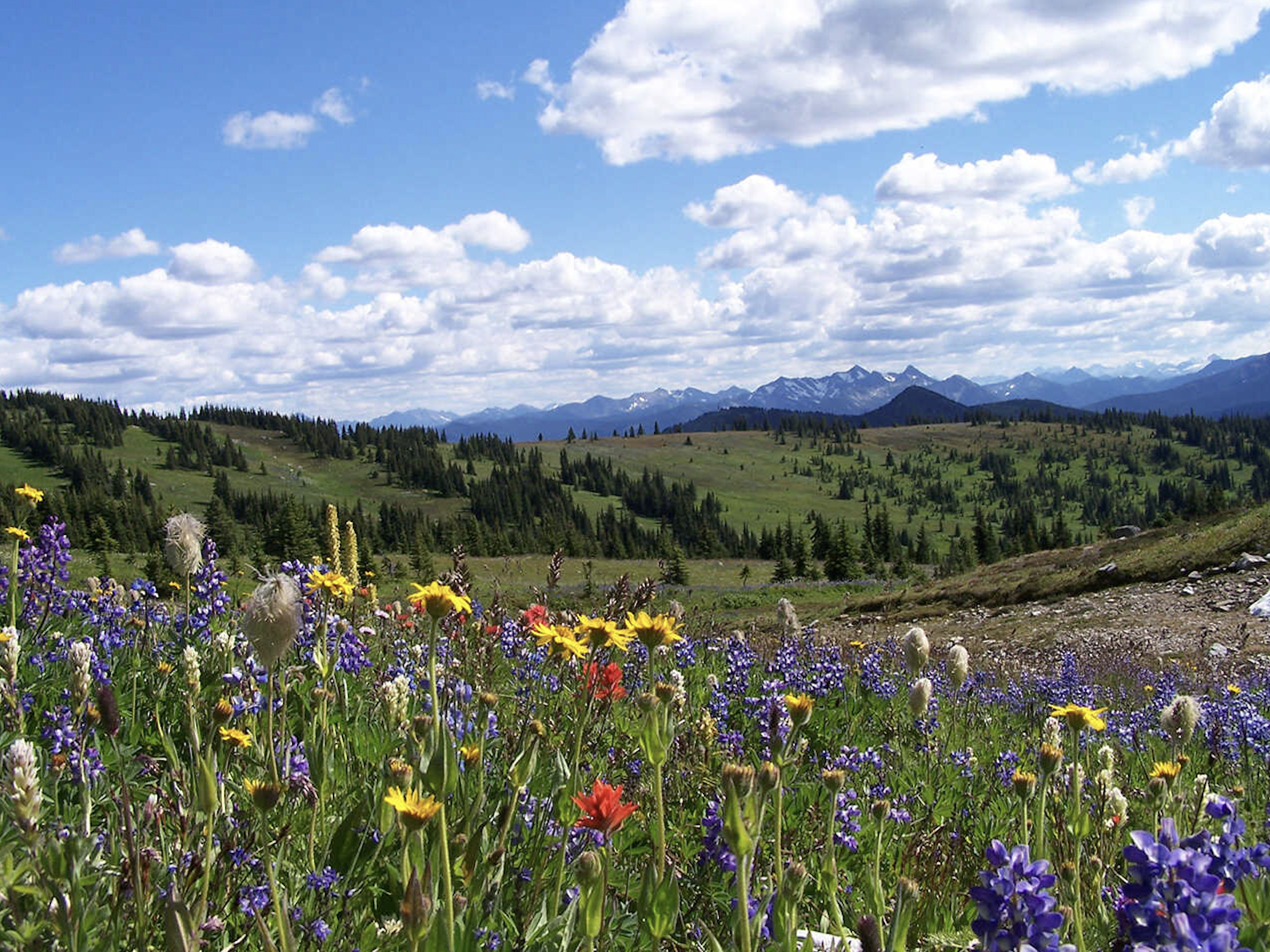
Walk the Heather Trail to Three Brothers Mountain for blooming summer wildflowers and sweeping meadows.
Explore Skyline I and II trails for high-elevation hiking and vast vistas of the Cascade Mountains.
Trek to Poland Lake through alpine forest for solitude, lake views, and late-summer flower displays.
Try the Paintbrush Trail from Strawberry Flats for a moderate walk through rich subalpine flora.
Visit the Windy Joe Lookout for historical interpretation and stunning views from a restored fire tower.
Climb the Dewdney Trail section from Bonnevier for historical hiking through wilderness ridges.
Wander the Monument 78 trail on the Pacific Crest Trail to reach the international border marker.
Hike the Rein Orchid Trail in spring to witness wetland orchids and peaceful forest scenes.
Explore the East Similkameen Trail, a lesser-known but beautiful trek along the upper valley.
Scenic and Wildlife Viewing near Eastgate BC
Look for black bears, mule deer, and marmots in quieter corners of Manning Park during dusk or dawn.
Visit Beaver Pond with binoculars to observe nesting birds, ducks, and active beaver lodges.
Watch mountain goats from pullouts on Highway 3 near cliffs east of Eastgate during sunny weather.
Photograph golden larches on the Frosty Trail each fall as they light up the alpine landscape.
Spot bald eagles and osprey soaring above the Similkameen River and perched in cottonwoods.
See marmots sunning on boulders near alpine meadows on clear summer days.
Visit Lightning Lake at sunrise or sunset for moody reflection shots and wildlife sightings.
Explore butterfly and hummingbird habitats near Strawberry Flats in late July.
Look for red foxes or pine martens in the forest margins near Lightning Lake and Windy Joe.
Join birding walks hosted by park staff or bring your own field guide to identify species.
Lakes, Rivers, and Water Activities near Eastgate BC
Canoe on Lightning Lake during summer and enjoy views of mountains mirrored in calm waters.
Fish in the Similkameen River near Eastgate, known for trout and whitefish in clear runs.
Swim in Lightning Lake at the day-use area beach during warm months for refreshing mountain water.
Picnic beside the Similkameen River at the pull-off near Eastgate bridge with easy water access.
Paddleboard early morning on Lightning Lake for peaceful gliding before wind picks up.
Photograph Similkameen Falls near Eastgate, especially during spring melt when flows are high.
Sit by the shoreline and listen to loons calling across the lake at dusk in summer.
Wade through shallow streams at Strawberry Flats and discover frogs and tiny fish.
Explore driftwood piles and quiet inlets around the lake with kids or a field journal.
Enjoy star reflections and quiet night paddling under the full moon on Lightning Lake.
Camping and Cabins near Eastgate BC
Camp at Lightning Lake Campground for lakeside trails, quiet evenings, and day-long adventures.
Stay at Mule Deer Campground nestled among trees with easy access to scenic paths.
Reserve Coldspring Campground near Allison Pass for quiet tenting and fast access to alpine hikes.
Try group camping at Lone Duck for shared meals, fire circles, and easy lake access.
Camp at Similkameen Falls Campground for the soothing sound of rushing water all night.
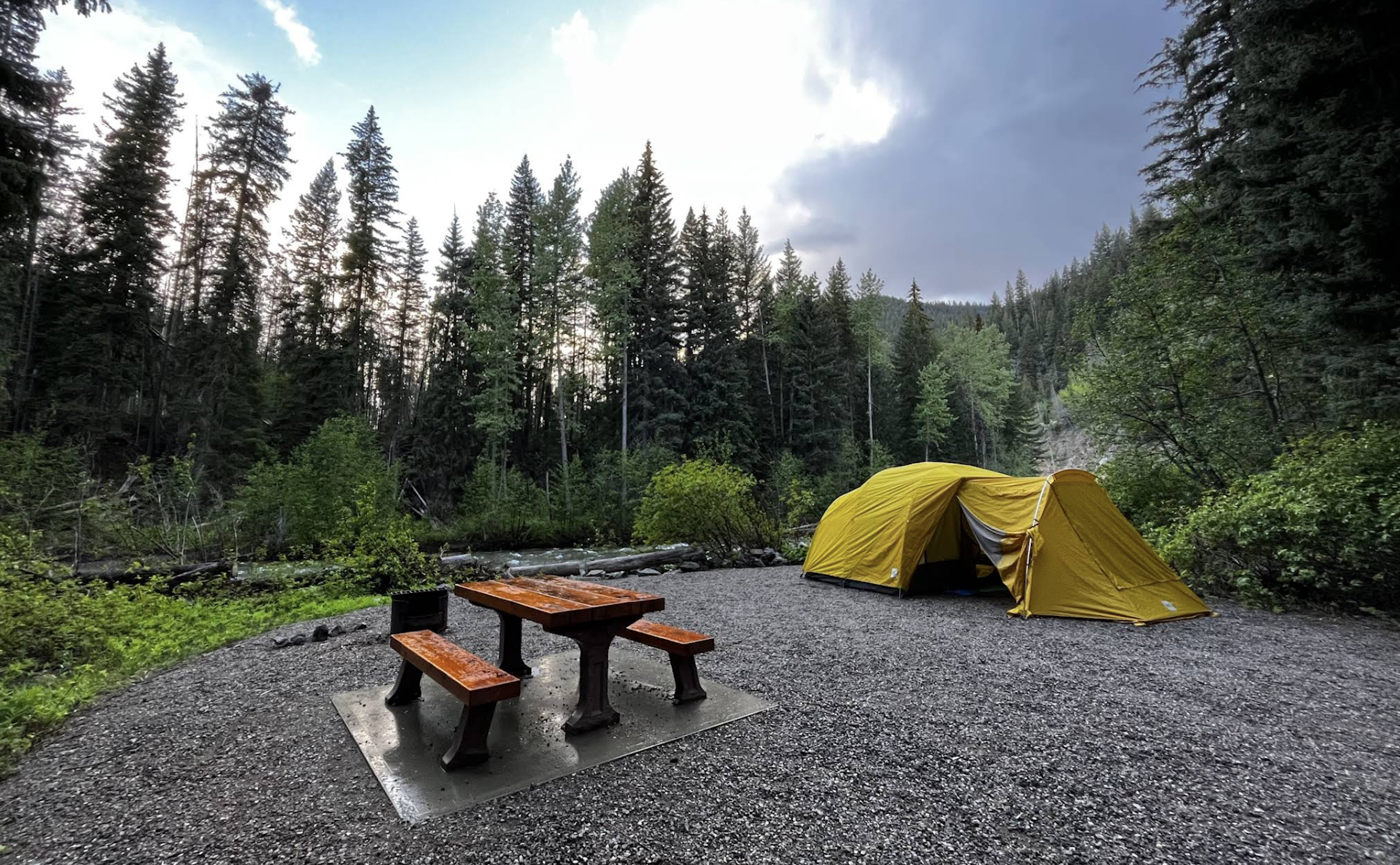
Set up your site at Eastgate Escape Campground for welcoming hosts and beautiful wooded surroundings.
Book a cabin at Manning Park Resort for rustic comfort with access to trails and resort amenities.
Rent a private forest cabin in Eastgate for quiet mornings and wildlife viewing from your porch.
Stay in a lodge room at the resort for cozy nights near the ski hill and skating rink.
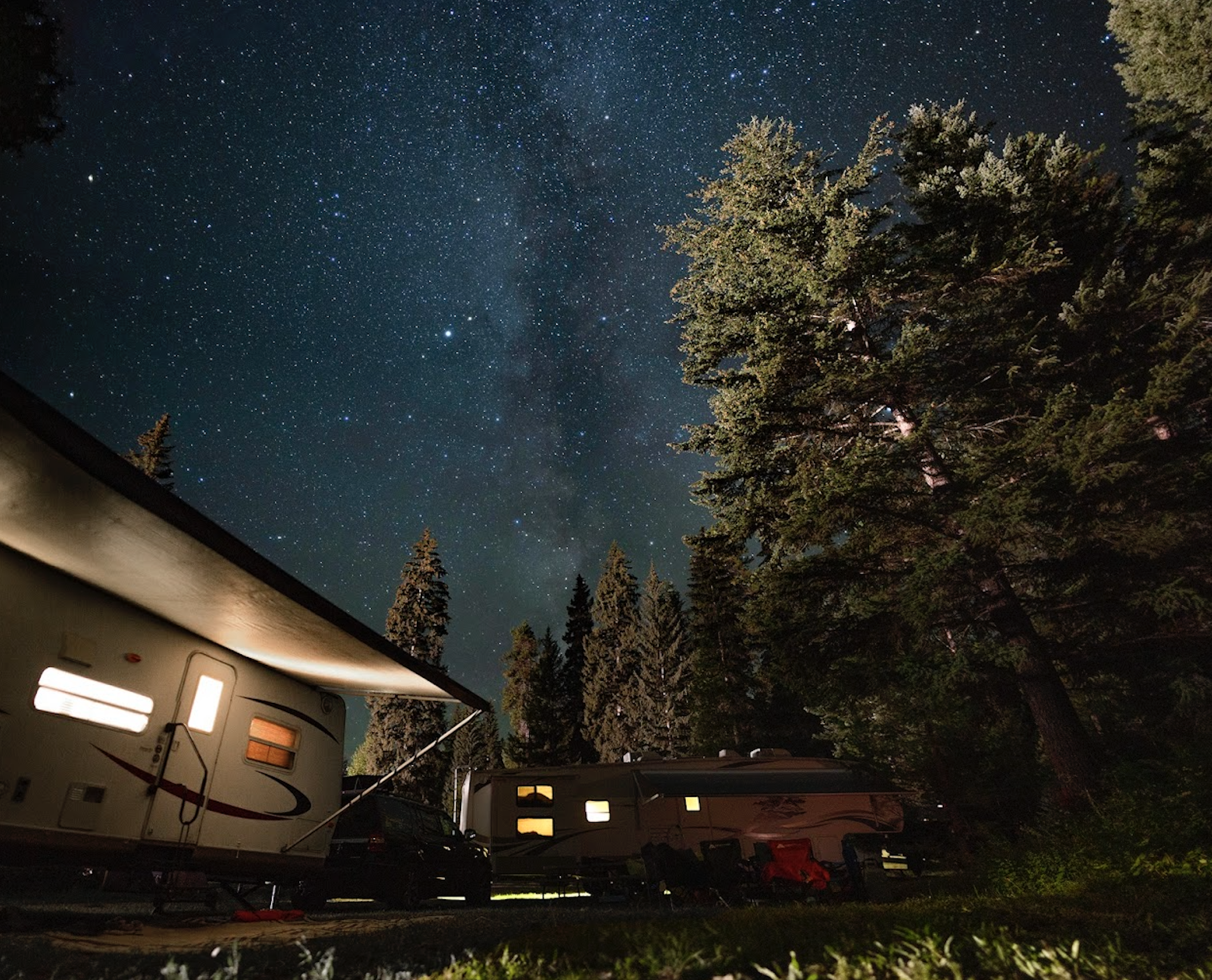
Bring your RV to Lightning Lake Campground and enjoy forested full-service lots in summer.
Winter Fun and Snow Activities near Eastgate BC
Ski the alpine runs at Gibson Pass for relaxed downhill terrain and family-friendly lifts.
Cross-country ski the groomed trails at Strawberry Flats for silent forest gliding in winter.
Rent snowshoes and explore quiet snowy trails around Lightning Lake or Windy Joe Meadows.
Ice skate at the outdoor rink beside the lodge under lights and falling snowflakes.
Sled or toboggan near the lodge area on maintained hills great for kids and families.
Take winter photos of hoarfrost-covered trees and alpine light early in the morning.
Stay overnight for Winter Solstice or Christmas in the Park events with music and lights.
Try a guided snowshoe or Nordic tour through the park’s quiet winter terrain.
Look for animal tracks in fresh snow and follow signs of wildlife activity along quiet trails.
Enjoy après-ski at the resort lodge with a warm drink, fireplace, and live music on special weekends.
Scenic Drives and Roadside Spots near Eastgate BC
Drive to Cascade Lookout for a wide view across the Skagit Valley toward distant US peaks.
Visit Allison Pass summit to read interpretive signs and enjoy sweeping mountain scenery.
Drive east along Highway 3 through the Similkameen Valley and admire semi-arid ridgelines.
Pull off at Rhododendron Flats in June to see blooming rare flowers just steps from the highway.
Watch for wildlife near roadside cliffs and slow for animal crossings marked along the route.
Drive west toward Sunshine Valley and explore remnants of Japanese internment camps from WWII.
Visit the scenic Hope Slide site for geological history and dramatic mountain landslide views.
Stop at the Manning Park entrance gate and pose by the stone sign and marmot statues.
Photograph highway turns in fall with trees glowing gold and red along the roadside ridges.
Take a sunset drive between Eastgate and Princeton to enjoy late light in open valleys.
History and Culture near Eastgate BC
Visit the Bonnevier Cabin site and learn about early settlers who built cabins near Eastgate.
Walk part of the Dewdney Trail, once used by miners and mounted police in the 1860s.
Explore remnants of old mining claims around Red Star and Anaconda with maps or guides.
Read interpretive signs about the building of the Hope-Princeton Highway at Allison Pass.
Learn about the legacy of Ernest C. Manning and the naming of the provincial park.
Visit the site of the former alpine ski jump above Gibson Pass, now overgrown but marked.
Look for Indigenous place names and historical connections in local signage and interpretive maps.
Attend cultural events at the resort lodge including nature talks, storytelling nights, or star tours.
Read displays in the day lodge about wildlife, fire ecology, and First Nations presence in the park.
Take part in special events like Canada Day celebrations or BC Parks birthday weekends.
Family-Friendly Fun near Eastgate BC
Feed ground squirrels near the parking lots with supervision and natural snacks like sunflower seeds.
Rent a canoe with life jackets for all ages and paddle with children on calm Lightning Lake.
Try easy trails like Rein Orchid or Lightning Lake Loop with little ones and strollers.
Watch for marmots sunning near trailheads and teach kids to spot animal signs on hikes.
Visit during the annual kids' fishing derby and enjoy friendly competition and prizes.
Swim at the day-use beach with sandy shores and a shallow entrance great for children.
Bring scooters or balance bikes and roll around the paved sections of the main campground loops.
Join a guided campfire program at the amphitheater with stories, songs, and wildlife facts.
Make snow angels and tiny snow people in the meadow near Strawberry Flats parking area.
Let kids collect wildflower sketches or draw the animals they see using nature journals.
Activities for Seniors near Eastgate BC
Enjoy short, level walks like the Rein Orchid Trail or Rhododendron Flats without steep elevation.
Take scenic drives and stop at accessible lookouts like Cascade Lookout and Allison Pass.
Visit the lodge for lunch, tea, or coffee and enjoy watching birds from the windows.
Join gentle interpretive walks hosted by park staff or volunteers during peak seasons.
Stay in a lodge suite or Eastgate cabin for comfortable sleeping, no stairs, and hot showers.
Watch wildlife from your car or roadside pullouts, especially early morning or dusk.
Attend music or storytelling events at the lodge for evening entertainment and local culture.
Enjoy a quiet day by the lake with a blanket, picnic basket, and a good book.
Photograph wildflowers in bloom from accessible spots like Strawberry Flats and roadside meadows.
Take short strolls with walking poles and rest benches along Lightning Lake day-use areas.
Accessible and Inclusive Options near Eastgate BC
Use the paved trail segments near Lightning Lake day-use area for mobility aids or wheelchairs.
Stay at an accessible lodge unit at Manning Park Resort with ramp access and barrier-free bathrooms.
Attend indoor events at the lodge’s meeting space, which includes wide doorways and accessible seating.
Enjoy flat riverbank terrain near Eastgate picnic sites for those with limited mobility.
Use the accessible washrooms at Lightning Lake and lodge facilities year-round.
Park close to Cascade Lookout and enjoy panoramic views with no walking required.
Request adaptive gear or assistance when booking through Manning Park Resort’s guest services.
Participate in family-friendly nature programs designed to include all ages and abilities.
Use snow-friendly wheelchairs or sled chairs on packed trails for accessible winter experiences.
Relax on the lodge patio in warm months and enjoy forest air, mountain views, and quiet comfort.
Let's Be Kind
When visiting Eastgate BC and the surrounding Similkameen and Manning Park areas, it's important to move with intention, mindfulness, and respect for the people, the land, and the wild spaces. This is not just a destination—it’s a living, breathing community within an alpine and forested ecosystem. These considerations are offered as a gentle guide to help preserve what makes this area special.
Start by respecting the land and the wilderness. This entire region sits on traditional Indigenous territory, and much of the surrounding area is protected, ecologically sensitive, or privately owned. Always stay on marked trails and roads, avoid disturbing natural features, and leave wildflowers, antlers, rocks, and artifacts in place for others to experience. If you're hiking, camping, or exploring, pack out everything you pack in—there is no roadside garbage service here. Toilet paper, food waste, and plastic should never be left behind, even in remote places. And when nature calls, use provided outhouses or follow proper backcountry waste practices.
Take fire safety seriously. Wildfire is a real risk in this forest-bound community. Always check fire bans, use designated fire pits, and never leave flames unattended. Even a small spark can endanger homes, wildlife, and entire watersheds. Respect local water sources and avoid overuse, especially in summer months when water availability can be limited.
Move through Eastgate quietly and with care. This is a peaceful place where most people live for the quiet. Keep music, vehicle noise, and evening conversations at considerate levels, especially in campgrounds and residential areas. If you're on the highway or in a local driveway, slow down—deer, elk, and bears often cross unexpectedly, and there are no sidewalks or streetlights in much of the area.
Respect wildlife by giving animals the space they need. Do not approach, follow, or feed them, even for a photo. Store food and scented items securely, and keep dogs leashed and under control to avoid conflict with wildlife or other visitors. Drones may be exciting to use, but they disrupt nesting birds, spook animals, and intrude on the quiet others come here to enjoy. Avoid drone use unless you’re in a permitted area and fully understand the regulations.
Community members here are friendly but value their privacy. Many homes and cabins may appear rustic or unmarked, but that doesn’t mean they’re abandoned. Don’t enter driveways, walk across yards, or explore old buildings unless invited. A friendly wave is always welcome, but let locals set the tone for conversation or engagement. When visiting small businesses or stopping for fuel or supplies, be patient and respectful—these services are often run by one or two people who wear many hats.
Camping and recreation spaces should be treated as shared spaces. Avoid setting up right next to someone else if there’s room to spread out. Keep dogs close, generators off at night, and leave firewood and water spigots accessible for everyone. If you’re visiting the park or river with a group, be mindful of your impact on others seeking solitude or quiet time in nature.
Accessible and inclusive respect matters too. Trails and spaces are shared by people of all abilities and ages. Offer space to those moving slower, give assistance if it seems welcome, and avoid blocking ramps, pathways, or rest areas. This area welcomes visitors of all kinds, and it’s up to everyone to keep it that way.
Lastly, move at the local pace. There's no need to rush here. Let go of the schedule, breathe in the clean air, and appreciate the moment. Whether you're visiting for a day, a season, or a lifetime, every action you take shapes the experience for someone else. Let it be one of care, calm, and quiet kindness.
Local Directory
We respectfully acknowledge the Upper Similkameen and Lower Similkameen First Nations Indigenous Bands